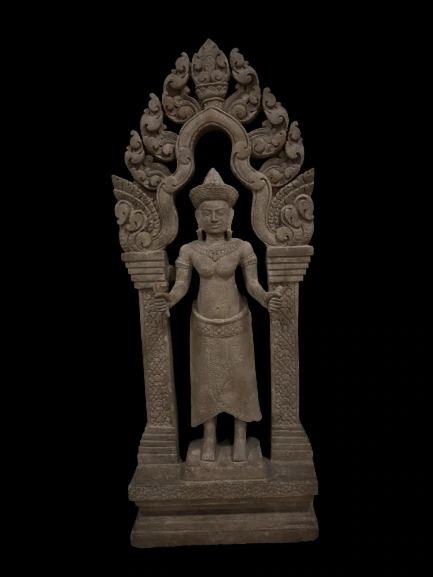
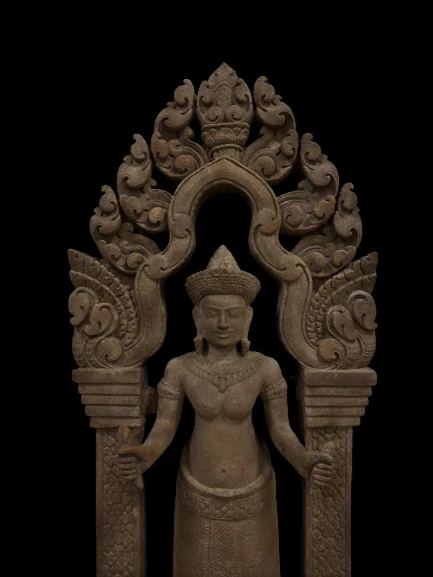
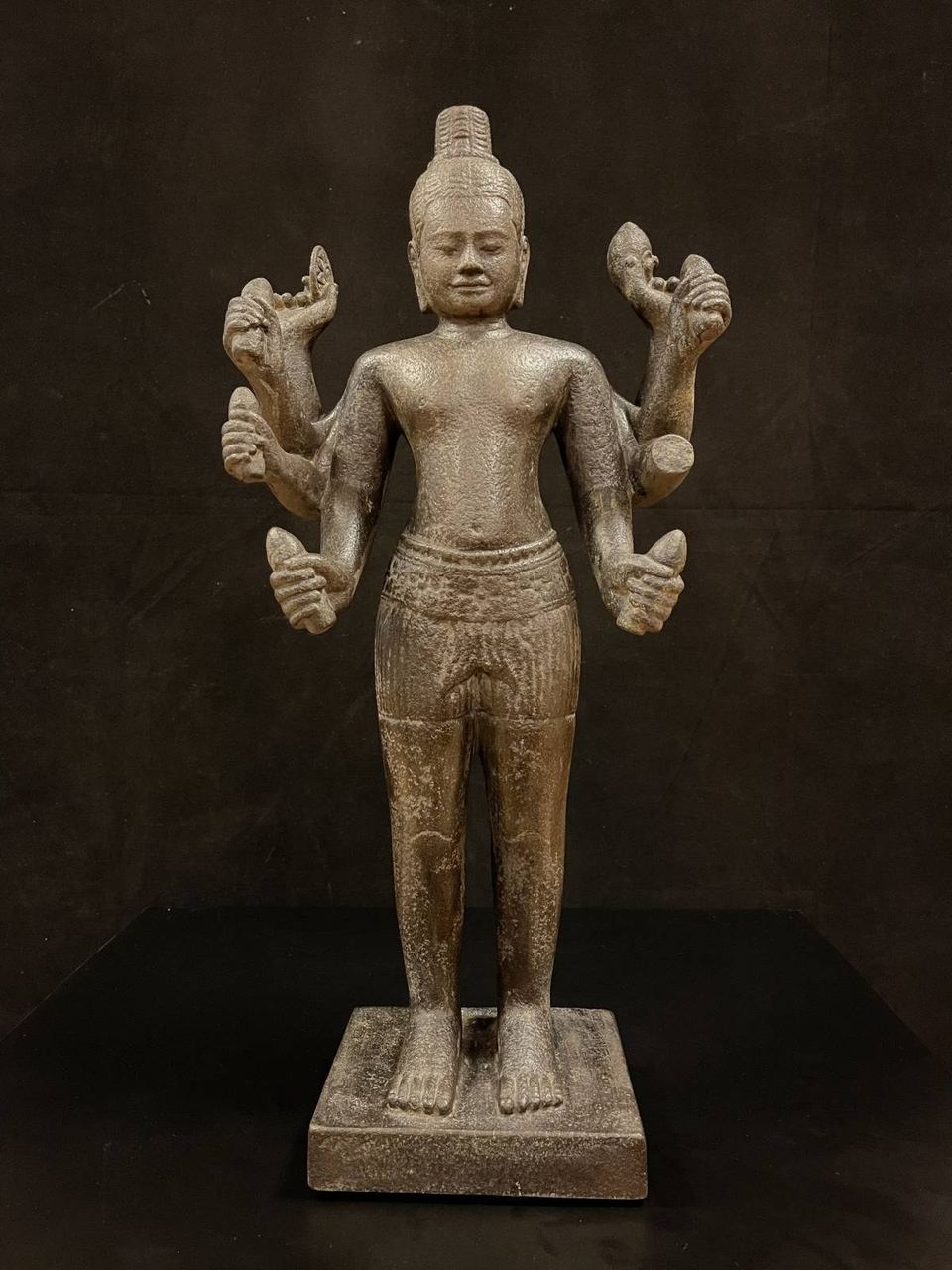
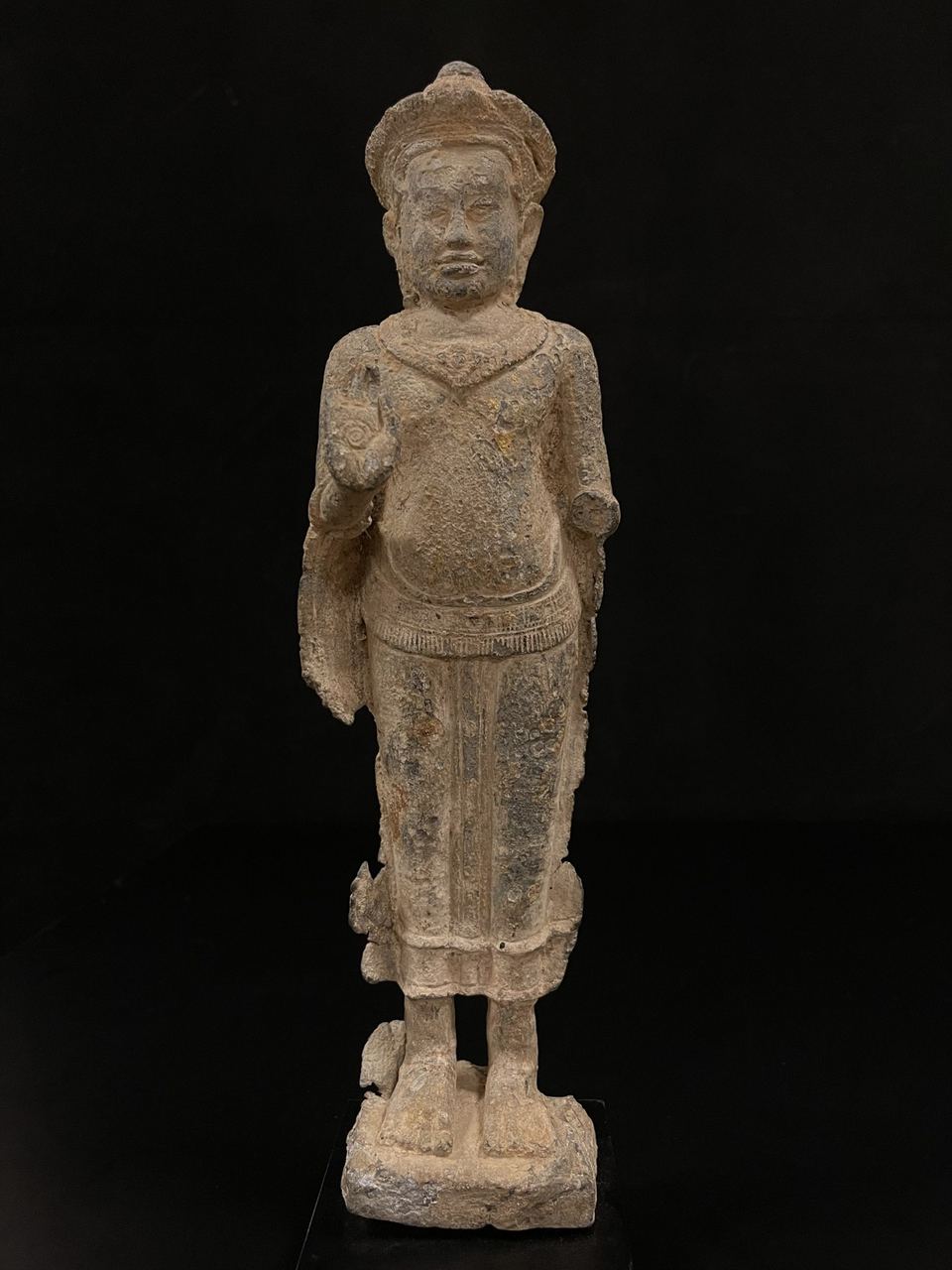
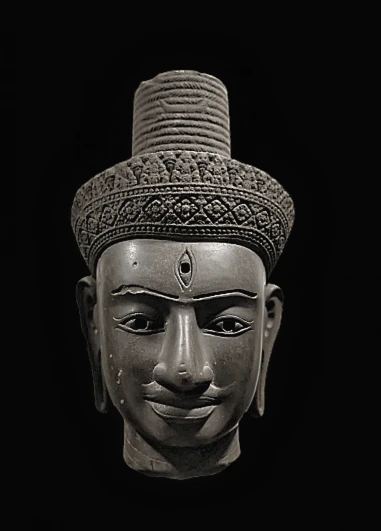
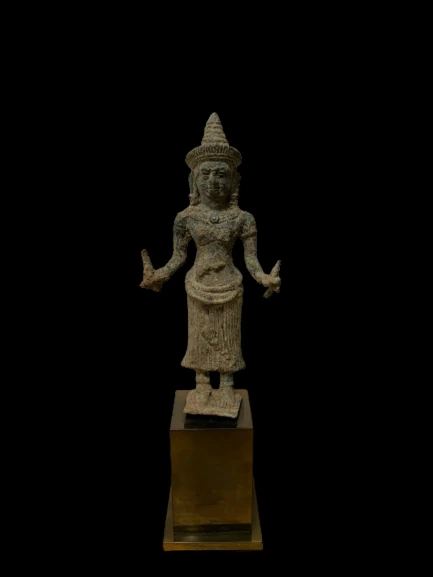
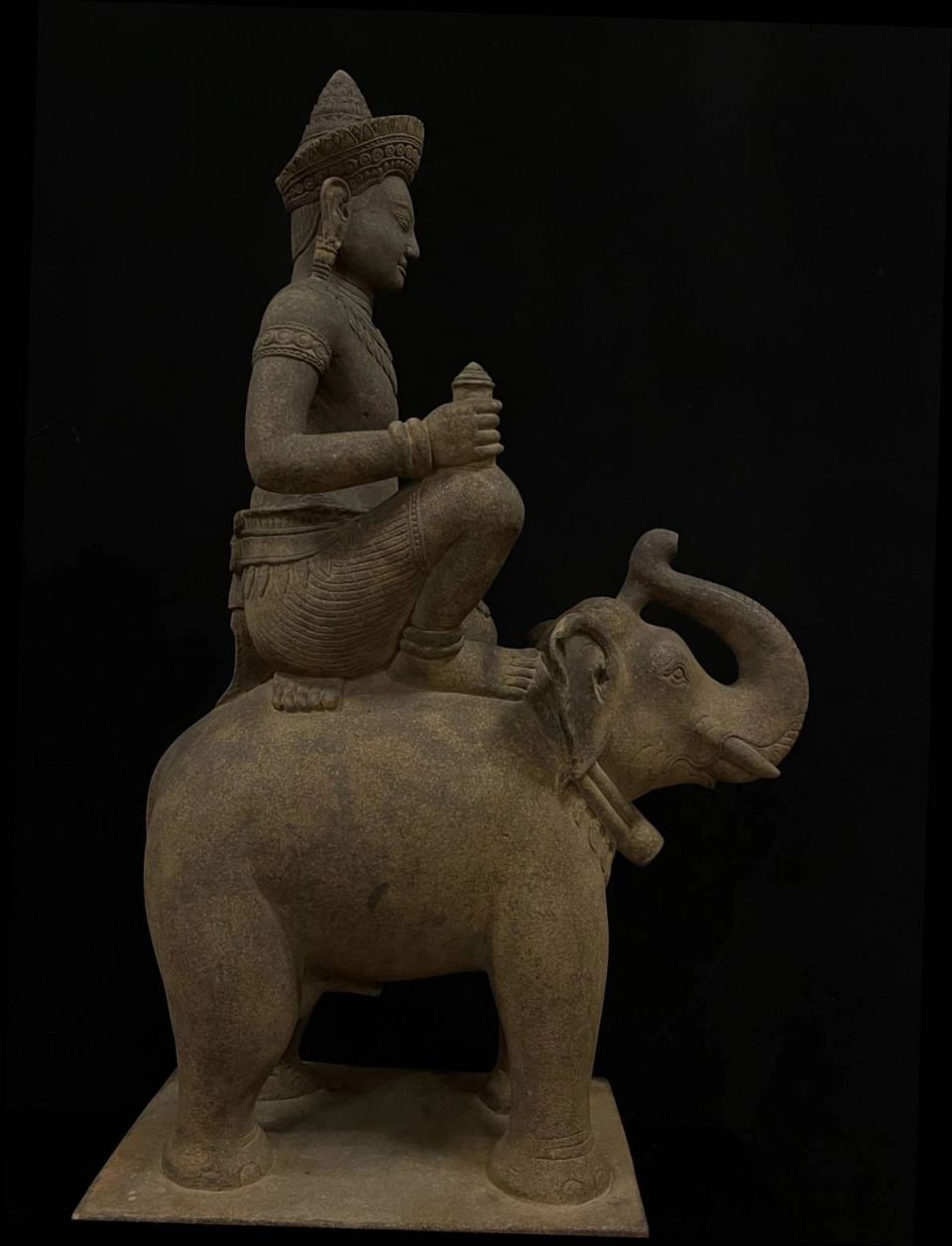
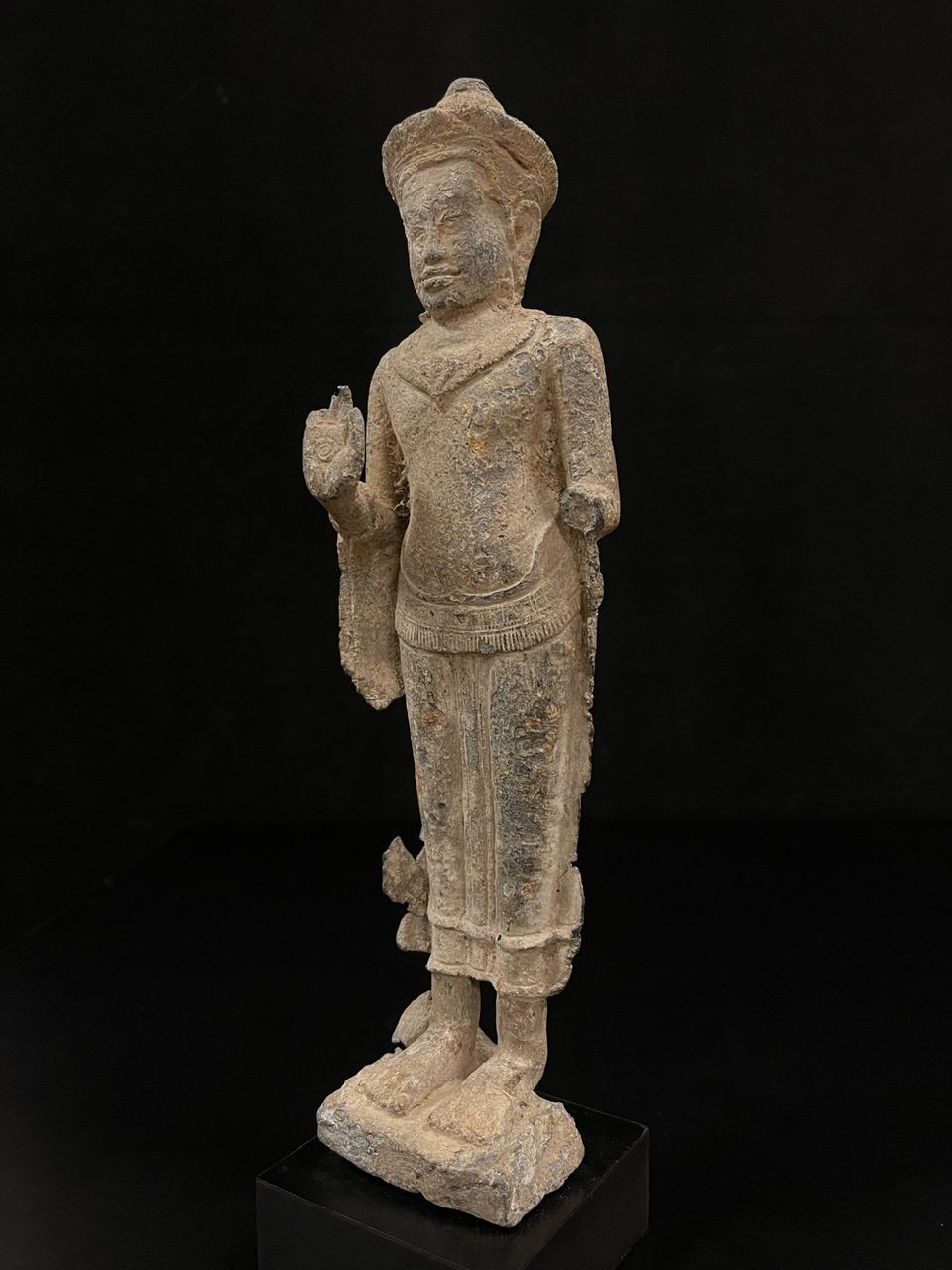
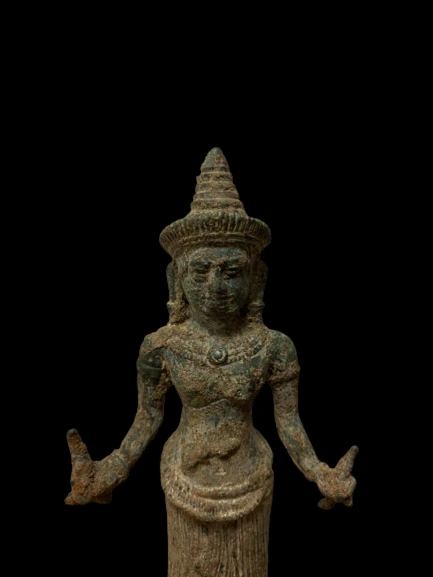
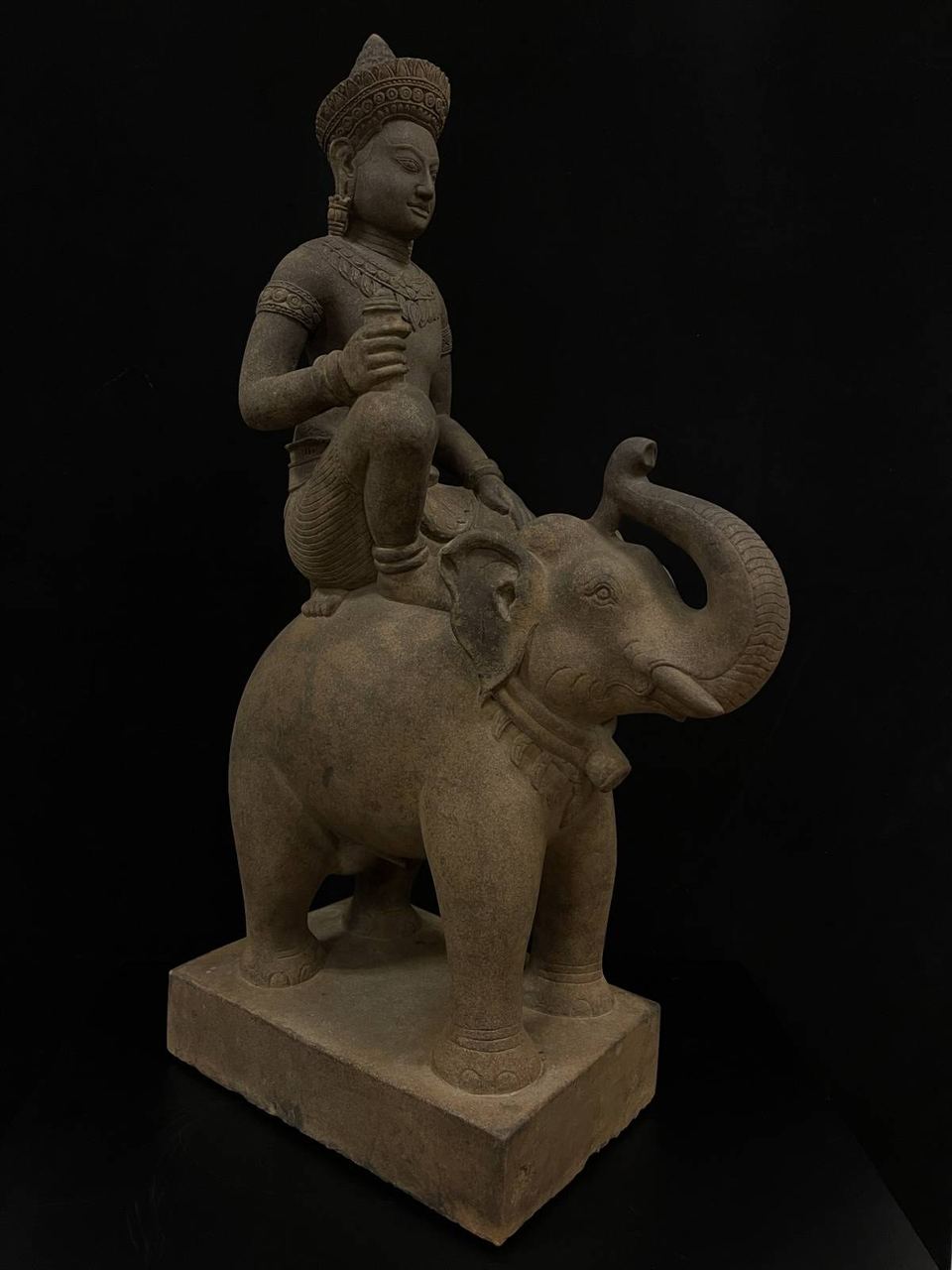
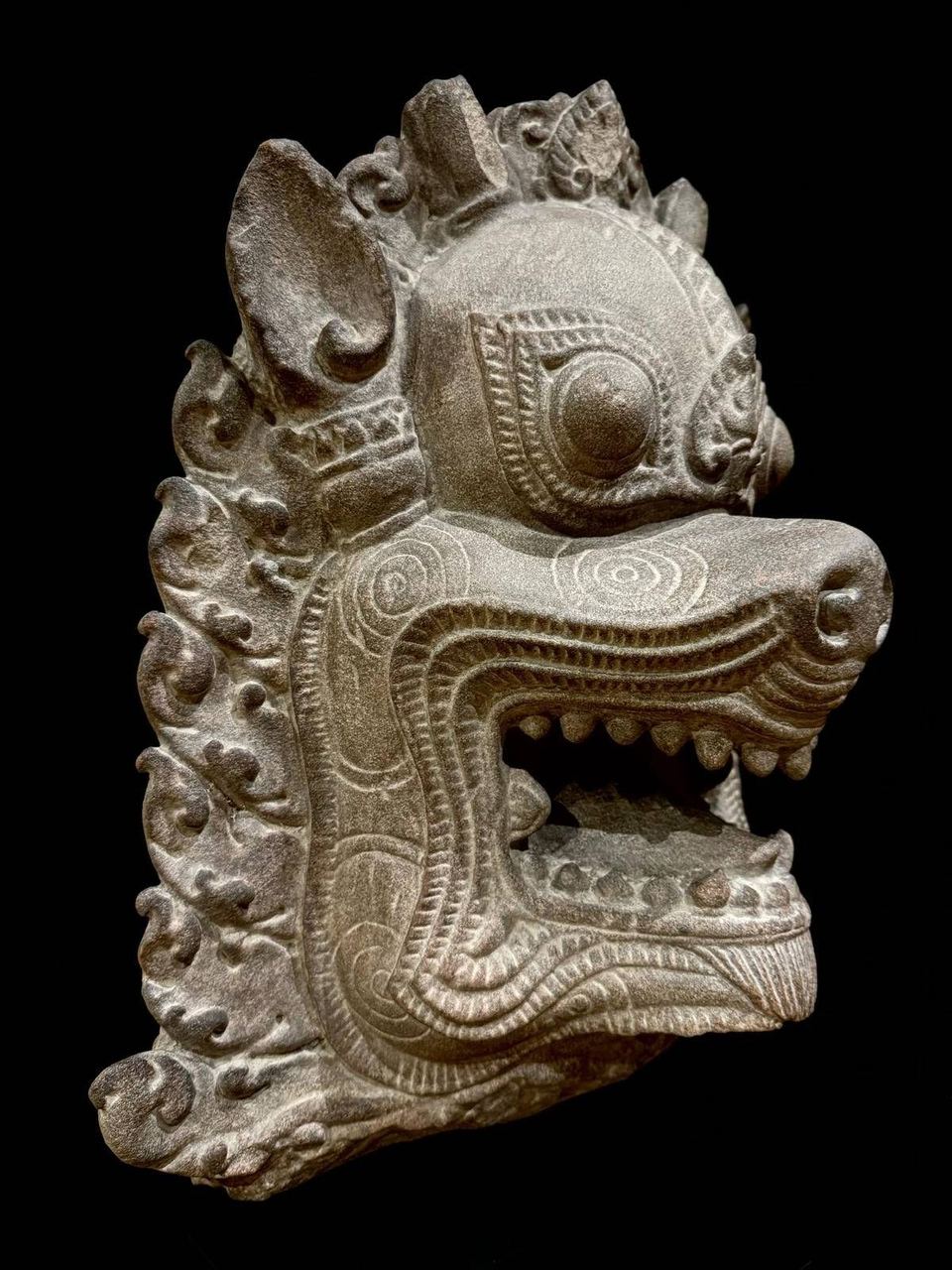
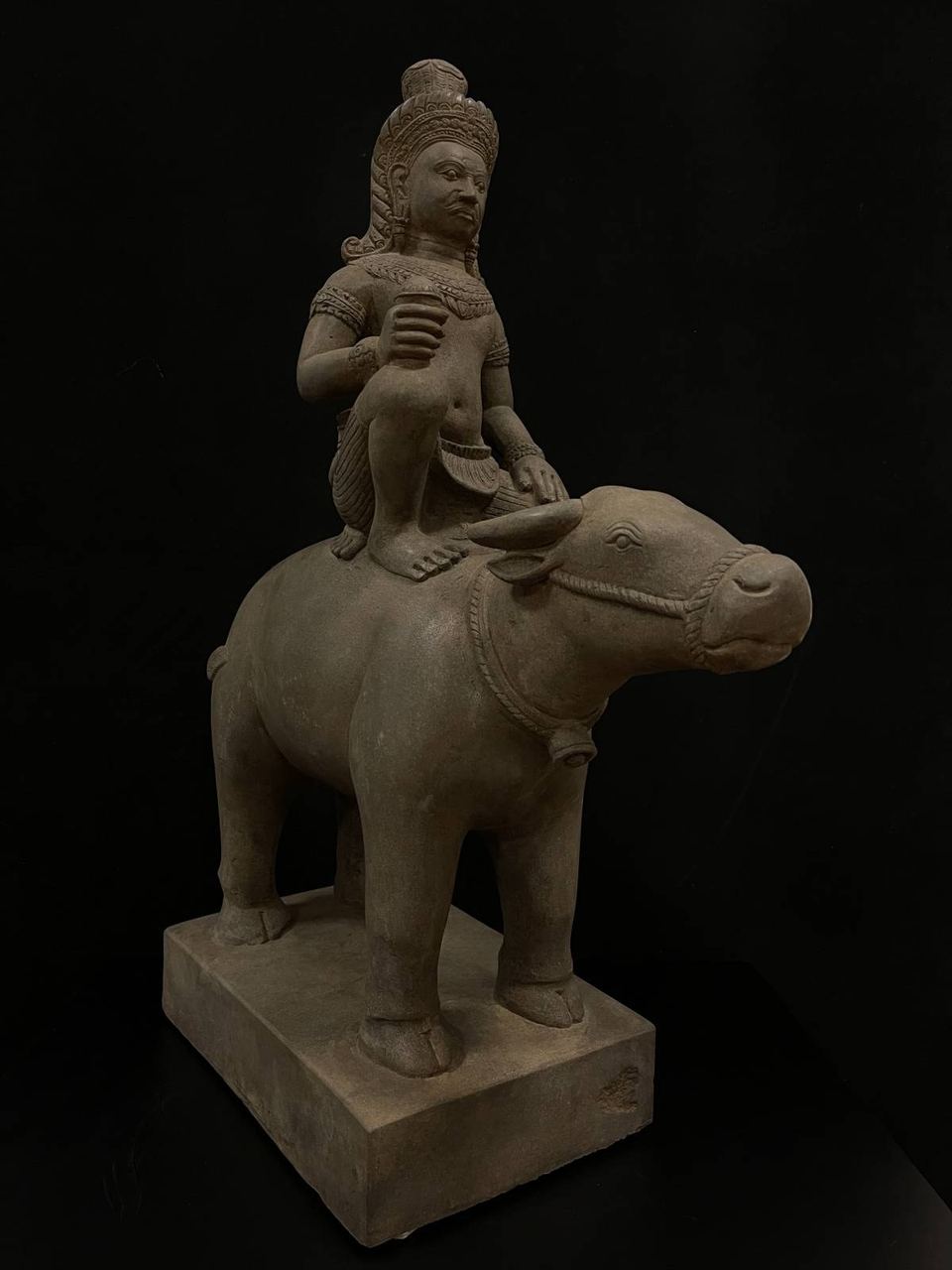
Sandstone stele of Lakshmi consort of Lord Vishnu
Lakshmi is the beautiful Hindu goddess of wealth and fortune. She retreated into the Milky Ocean, from which she later came out when the gods, following the direction of her future consort Vishnu, churned the sea. She came rising out of the ocean standing on a lotus flower.
In the Mahabharata, Lakshmi was born from the stirring of the primeval milky ocean by the gods and demons. Following the intervention of Brahma and Vishnu, Lakshmi miraculously appeared from this sea of clarified butter clothed all in white and radiating youth and beauty.
Goddess Lakshmi, is usually depicted with a lotus flower. She is usually shown sitting on a lotus flower and holding it in her hands. Thus, Lotus is a symbol of purity and enlightenment amid ignorance. ... Lotus flower is also offered as a seat for Goddess Lakshmi during worship.
Lakshmi typically wears a red dress embroidered with golden threads, symbolizes fortune and wealth. She, goddess of wealth and prosperity, is often represented with her husband Vishnu, the god who maintains human life filled with justice and peace.
According to Ramayana, Mahabharata and Puranas, the goddess Lakshmi first lived with the demons before the gods acquired her. ...
Lakshmi was briefly associated with Shiva before she became the faithful consort of Vishnu-Narayana, the ultimate refuge of man.
With Vishnu, she was domesticated.
The Bayon (Khmer: ប្រាសាទបាយ័ន, Prasat Bayon) is a richly decorated Khmer temple at Angkor in Cambodia.
Built in the late 12th or early 13th century as the state temple of the Mahayana Buddhist King Jayavarman VII (Khmer: ព្រះបាទជ័យវរ្ម័នទី ៧), the Bayon stands at the centre of Jayavarman's capital, Angkor Thom (Khmer: អង្គរធំ). Following Jayavarman's death, it was modified and augmented by later Theravada Buddhist kings in accordance with their own religious preferences.
The Bayon's most distinctive feature is the multitude of serene and smiling stone faces on the many towers which jut out from the upper terrace and cluster around its central peak. The temple has two sets of bas-reliefs, which present a combination of mythological, historical, and mundane scenes. The main conservatory body, the Japanese Government Team for the Safeguarding of Angkor has described the temple as "the most striking expression of the baroque style" of Khmer architecture, as contrasted with the classical style of Angkor Wat (Khmer: ប្រាសាទអង្គរវត្ត)
Your message will already name this piece (No. 7032).
Certificate of authenticity included. Packed for hand-carry or shipped worldwide.